

Prusament · Polypropylene
Polypropylene
Lightweight, chemically resistant and heat-tolerant — and the one material where a single supplier makes the print sheet, the printer and the filament. The complete, validated PP workflow, from one place.
138°C
High-temp resistance · PP Glass Fiber
Madein-house
Guaranteed diameter tolerance
Low
Moisture uptake · drying not required
3-in-1
Sheet + printer + material, one supplier
The whole workflow, from one supplier
Sheet, printer, material — fully integrated
Polypropylene is notoriously hard to stick to a print bed. Most workflows stitch together tape, third-party filament and a machine that was never tuned for any of it. Prusa makes all three parts — the dedicated PP print sheet, the printer and the filament — so the surface, the profile and the material are validated to work together.
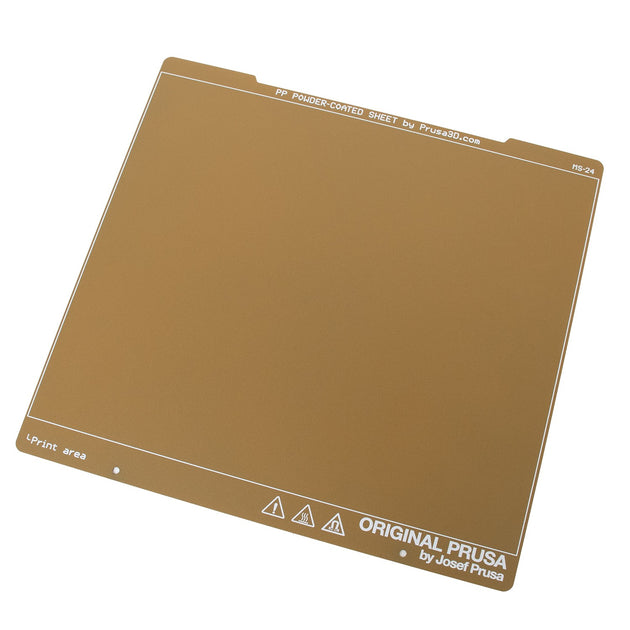
+
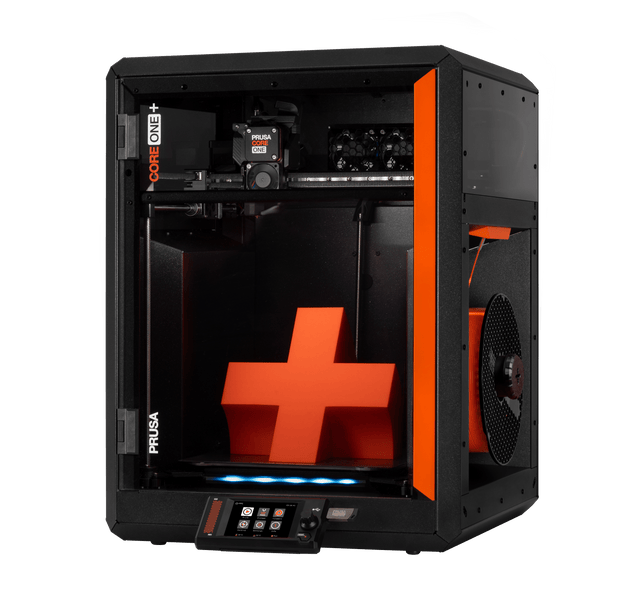
+

03 · The material
Prusament PP
In-house PP and PP composites (Glass Fiber, Carbon Fiber) to a guaranteed diameter tolerance — lightweight, chemically resistant, heat-tolerant.
Buy PP Carbon Fiber — $ 89.99 →= one validated PP workflow — sourced, supported and warrantied through a single US-based team.
Why PP
Chemical resistance, low moisture, low weight
Polypropylene resists a wide range of solvents, non-oxidized bases, acids and oils — the kind of chemical exposure that degrades most printable plastics. It’s lightweight, and its low moisture uptake means drying isn’t necessary before printing.
The fiber-filled grades add dimensional stability: PP Glass Fiber resists heat up to 138 °C and prints large parts with little to no warping, even without an enclosure. PP Carbon Fiber offers a matte finish and heat resistance up to 120 °C. Both need a hardened nozzle, as the fibers are abrasive.
The trade-off is lower layer-to-layer adhesion than pure PP — something to design around, and something our team can advise on.

Prusament PP Carbon Fiber. Source: prusament.com.
Where it goes to work
Industries & applications
Prusa’s own examples center on the lab and the chemical bench — exactly where PP’s resistance earns its keep.
Lab & medical-adjacent
Vial stands, custom racks and heat- and chemical-resistant labware — Prusa’s cited use for PP. Low moisture uptake suits humid and wash-down environments.

Chemical handling
Chemically resistant canisters and lids, chlorine-pool dispensers and replacement parts that live in contact with solvents, acids and bases.
Packaging & fixtures
Lightweight, tough functional parts, jigs and fixtures — and automotive / RC components where PP’s chemical and heat resistance matter.
Prusament PP and its composites are industrial 3D-printing materials, not certified medical devices. Applications like labware and orthotic or prosthetic work are illustrative of PP’s properties, not clearances. You are responsible for validating any part for its specific use and regulatory context (for example FDA / ISO 13485). A PP medical whitepaper is in production — request a copy through Talk to an Expert.
Drones & UAV
Light enough to fly, tough enough to work
Prusament PP is a genuinely lightweight polymer — its technical data sheet lists a density of just 0.91 g/cm³ (ISO 1183). Prusa notes that PP’s lightweight properties make it suitable for the aerospace industry, as well as for hobby RC aircraft — the same weight-to-strength logic that matters on a UAV airframe.
Add PP’s very good chemical resistance (solvents, non-oxidized bases, acids and oils) and heat tolerance up to 120–138 °C in the fiber-filled grades, and it becomes a practical choice for lightweight airframe and structural UAV components, brackets, housings and payload fixtures that fly outdoors and take chemical exposure.
For defense and NDAA-scope UAS programs, PP is made in-house by Prusa and supported through a single US-based team. Tell us about the airframe and mission environment and we’ll help you spec it.
0.91 g/cm³
Density
ISO 1183 · PP Carbon Fiber
120–138°C
Heat resistance
CF / GF grades
Very good
Chemical resistance
Solvents, bases, acids, oils
In-house
US-based support
Made & supported by one team
Sourcing note: density and property figures are from Prusa’s published PP Carbon Fiber data sheet and material page. UAV framing describes suitable applications for PP’s properties, not a flight-certification claim — validate any airborne part for its platform and mission.
Print parameters
Made to print together
Both fiber-filled grades need the PP print sheet (or a separation layer) and a hardened nozzle. Print in a well-ventilated space; an enclosure helps contain odor and can improve layer adhesion.
245–270°C
Nozzle temperature
PP-GF 245 ±10 °C · PP-CF 270 ±10 °C
85–95°C
Heatbed temperature
Enclosure not required for stability
PP Sheet
Recommended print surface
Never clean with acetone
Standing up a PP workflow?
Start with the print sheet that’s in stock today, then let us complete the picture — printer, material and validated profiles from one US-based team. Ask us for the PP medical whitepaper while it’s in production. Safety data sheets, material certifications and origin documentation are available on request.